
Ultrasonic Characteristics Features of Ultrasonic Metal Welding Machine
Ultrasonic sound refers to inaudible sound waves with frequency above 20 kHz, which serves as the working core of ultrasonic metal welding machines.
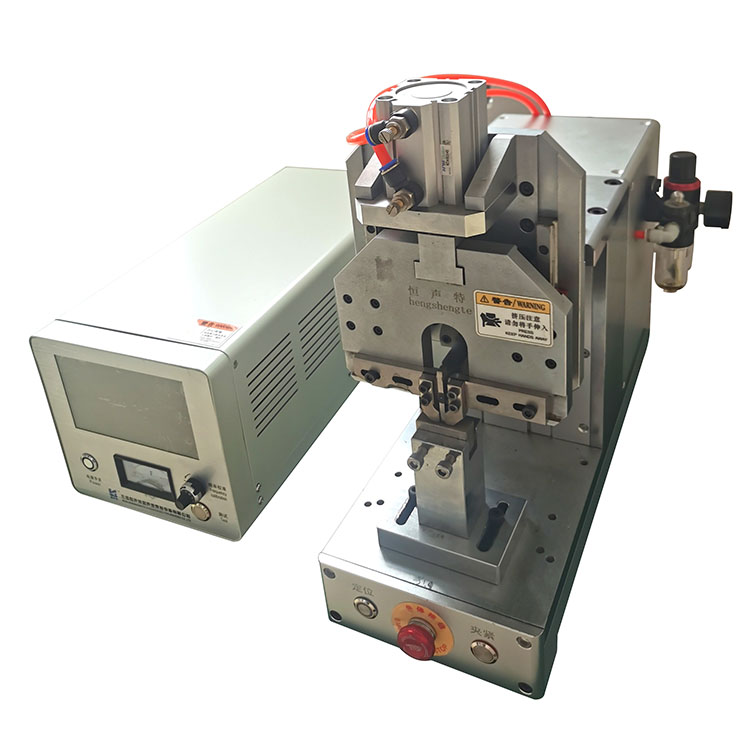
Basic Physical Characteristics of Ultrasonic Waves
1. Wavelength and Radiation
Wave propagation speed equals frequency multiplied by wavelength. Electromagnetic waves travel at 3×10⁸ m/s, while sound velocity in air is only around 344 m/s at 20℃. The relatively low‑speed sound brings short wavelength, achieving high distance resolution and good directivity.
2. Reflection
Ultrasonic waves can be nearly 100 % reflected by metal, wood, concrete, glass, rubber and paper materials. This reflection property enables ultrasonic detection and energy transmission on metal workpieces.
3. Temperature Effect
Sound velocity formula: c = 331.5 + 0.607t (m/s), where t stands for Celsius temperature. Sound propagation speed changes with ambient temperature. For precise distance measurement or stable ultrasonic output, ambient temperature inspection is essential.
4. Attenuation
Ultrasonic intensity weakens while spreading in air. The loss comes from spherical‑diffusion diffraction and energy absorption by transmission medium.
Core Process & Equipment Characteristics of Ultrasonic Metal Welding Machine
- Solid‑state welding without melting Welding is completed by high‑frequency mechanical vibration and pressure. The bonding zone stays far below metal melting‑point. Original metal microstructure remains intact without brittleness or large deformation.
- Excellent electrical performance for conductive components The welded joint features ultra‑low contact resistance. Perfect for lithium‑ion battery tabs, automotive high‑voltage wire harness, bus‑bar assembly and other power‑conductive partsOmni R&D.
- Capability for dissimilar non‑ferrous metal joining It welds copper, aluminum, nickel, silver, tin and their dissimilar combinations. Good tolerance for oxidized or tinned surfaces, minimal workpiece pre‑treatment requiredEmerson.
- Consumable‑free, safe and eco‑friendly operation No solder, flux or shielding gas needed. The whole process is spark‑free, spatter‑free and fume‑free, realizing clean cold‑like processing.
- High efficiency and low power consumption Each welding cycle finishes within fractions of a second. Energy consumption is much lower than resistance welding. Easy integration into automatic production lines for mass manufacturingEmerson.
- Intelligent digital control system Equipped with PLL phase‑locked loop frequency‑tracking system and lightweight DDS digital system. Parameters including welding energy, time, pressure and amplitude are adjustable in closed‑loop mode, guaranteeing stable and repeatable weld quality with production traceability.
- Flexible configuration & reliable after‑sales support Cover spot welding, wire harness welding, roll welding, copper/aluminum tube sealing and cutting. Custom non‑standard machines are available. Imported core components plus self‑produced key parts, plug‑and‑play connectors for simple maintenance. On‑site commissioning, 3‑year warranty provided by manufacturer.