
Ultrasonic metal welding machines often suffer from weak welding and cold solder joints during production
1. Unstable air pressure
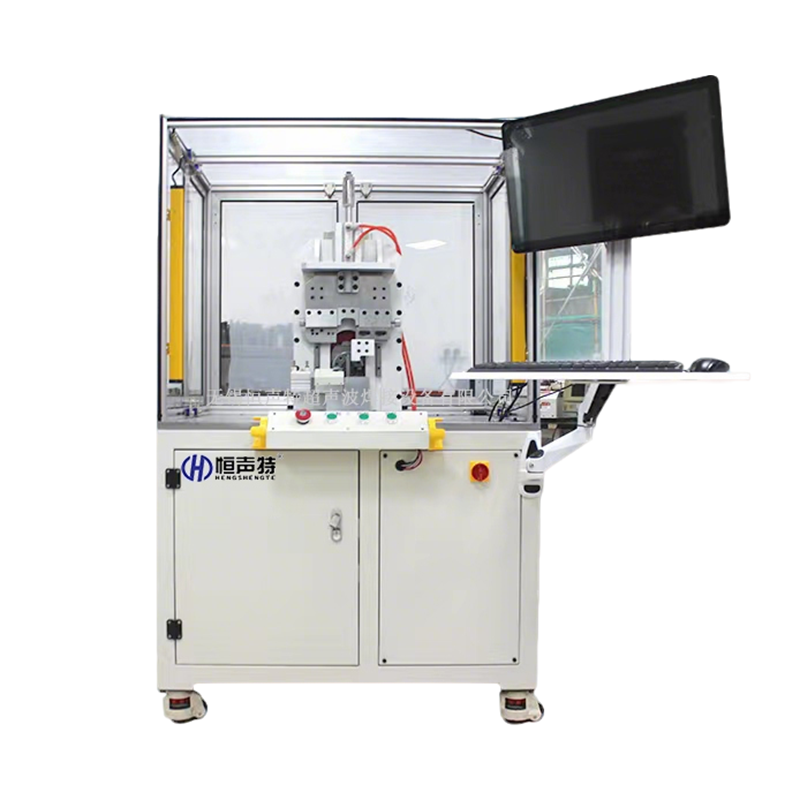
Many ultrasonic welding machines pass strict testing and sample welding at the factory before delivery. But after customers receive the equipment, poor welding frequently occurs. A typical feature: welding works well after work hours, while defects appear during peak working hours. This is caused by unstable workshop air pressure. When multiple pneumatic equipment runs at the same time and the air pipeline is too long, air pressure drops and fluctuates. Ultrasonic metal welding requires stable pressure. Fluctuating pressure easily leads to cold joints and weak welds. Solutions: Equip an independent air compressor exclusively for the ultrasonic metal welder. If a large machine is used for small workpieces, replace it with a smaller air cylinder.
2. Poor frame precision and unreasonable structure
Many buyers think the ultrasonic generator is the only core component, ignoring the importance of the frame. If the frame is poorly designed and roughly processed, rigidity will be insufficient. The machine may tilt backward during welding, causing uneven pressure. Low machining precision also makes it hard to balance the welding horn when changing molds, resulting in uneven ultrasonic energy transfer and unreliable welding. Solutions: Check frame structure and machining quality before purchasing. Replace with a high-precision frame if the existing frame has structural defects.
3. Insufficient ultrasonic power
Some factories choose low-cost machines without reserving power margin. When the welding area exceeds the machine’s capacity, the ultrasonic energy is not enough to form a solid metal bond, causing weak welding. Low power cannot meet production requirements for larger or thicker workpieces. Solutions: Select an ultrasonic metal welder with enough power margin to adapt to different products for later production.
4. Material composition problems
Many metals can be welded by ultrasonic metal welders. However, alloying elements, impurities or inconsistent material batches will reduce the welding performance. Even weldable base metals with extra additives are prone to poor welding strength and easy separation. Tips: Confirm raw material composition and consistency before mass production.
5. Changed parameters or loose mechanical parts after transportation
Manufacturers usually debug and lock welding parameters before shipment, and samples show good welding results. After long-distance transportation, vibration may loosen frame fasteners and cause position offset. Operators may also accidentally touch the control buttons and change welding time, pressure or amplitude. The final welding quality becomes worse than factory samples. Solutions: Do not modify factory preset parameters randomly. Contact the equipment supplier for recalibration if problems occur.
Extra note
Besides the above hidden factors, worn welding horn, mismatched transducer and horn, oil, oxide layer on workpiece surface, and excessive stacking layers can also cause welding failure.